
Comparative opening — why the choice matters
When agencies set a firm bar for indentation resistance at elevated service temperatures, the pavement marking designer must answer with clarity and craft. The argument narrows to two protagonists: on one side, bespoke mixtures aged in field trials; on the other, pre-tested thermoplastic resins whose composition is already tuned to resist softening and permanent deformation. Early in a project dialogue, specifying a known rosin resin modifier can shift outcomes from uncertain to predictable. Thermoplastic formulations, tested for viscosity and melt flow, deliver repeatable adhesion and controlled softening point—qualities that matter when surfaces sustain heat and traffic.
Head-to-head: pre-tested thermoplastic resin versus traditional mixes
Pre-tested thermoplastic road marking resins arrive with a dossier: measured melt flow, targeted modulus, and documented creep behavior under controlled heating. Traditional mixes often rely on in-field adjustment—tackifiers are added, softening point tweaked—and results vary from route to route. In practical terms, a pre-tested material reduces the need for conservative thickness or redundant milled layers, because its performance envelope is established. The comparison is not merely material science; it is operational risk management. Softening point and adhesion are not abstract—they determine whether a line holds form at 50°C or begins to slump under repeated wheel load.
Operational production teardown: from lab batch to lane
Begin with recipe control. Polymerization steps, melt blending, and controlled dosing of rosin-based tackifiers set the baseline. In manufacturing, stability of viscosity during dosing and uniform dispersion of pine-derived modifiers avoid pockets of low modulus that invite creep. A practical teardown will note these stages: raw polymer preheat, addition of tackifier and stabilizers, high-shear milling, and cooled pelletization. In the operational production teardown one must also record {main_keyword} and {variation_keyword} as traceable parameters, ensuring each lot ties back to bench tests. Quality control here is simple and strict—measure melt flow, record softening point, and conduct short-term compression-cycling at target temperature to screen batches before shipment.
Real-world anchor and material lineage
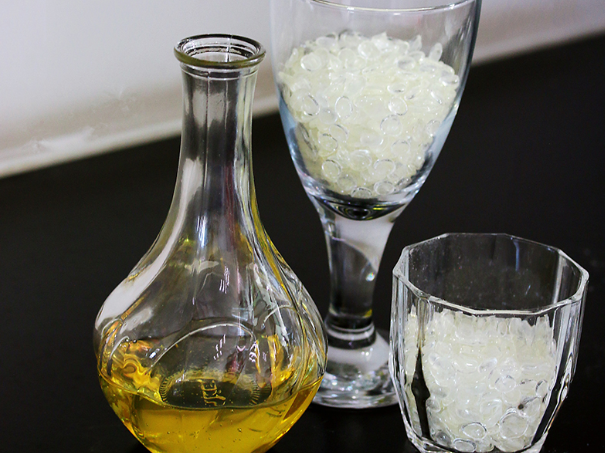
Pine-derived rosin has a lineage that grounds modern practice: artisans used pine gum rosin for centuries in adhesives and musical-bow finishing, a practical testament to its tack and thermal behavior. That same material, when purified and blended with engineered polymers, contributes consistent tack and improved adhesion on asphalt and concrete. Remember: creep and indentation are expressions of the material’s modulus over time at temperature—measuring modulus decay under controlled thermal soak gives actionable insight that field-only trials cannot provide. — It is this lineage and measurement that link tradition to today’s pavement engineering.
Common mistakes and the small safeguards that matter
Teams often err by assuming higher binder load alone cures softening; instead, targeted modifiers and controlled melt flow are more effective. Skipping batch-level compression-cycling or relying solely on visual inspection invites late-stage failures. Likewise, mismatching glass transition behavior between bead and binder causes premature delamination. Small safeguards—defined dosing windows, a standard melt flow index, documented adhesion tests at 50°C for a minimum 72-hour conditioned period—prevent such gaps.
Golden rules for selection — three metrics to trust
1) Measured softening point under a defined heating rate (e.g., 5°C per minute) and a 72-hour soak at target temperature: ensure the material maintains shape and modulus after the soak. 2) Melt flow stability across production lots: record variation and reject batches with >10% deviation from the lot mean. 3) Short-term compression-cycling at 50°C with a defined indenter diameter and dwell time: accept only those formulations that show less than a specified permanent deformation threshold after 1,000 cycles. These metrics tie laboratory certainty to on-road durability and reduce surprises at installation.
In practice, the right pre-tested resin shortens approval timelines, simplifies installation protocols, and yields lines that stay true under intense heat and traffic—an engineer’s quiet victory. KOMO. —