
Start with the brief — what you actually need
If you’re specifying or buying a commercial pergola for clients or for your venue, focus on outcomes: weather protection, reliable operation, maintenance load, and safe long-term performance. Think about whether you want a plain shade frame or a photovoltaic pergola that feeds lights or grid power. Match tests to those outcomes from day one so the contractor knows what counts as “pass.”
Core tests every buyer should insist on
Load and anchorage: verify design calculations match site soil and wind conditions; torque and pull-out tests on anchors. Louver operation: cycle the louvers 1,000 times under load and check alignment and actuator torque. Water management: simulate heavy rain while louvers move, inspect for pooling, leaks at girts and end caps. Wind performance: static deflection at rated wind load, plus functional checks after gust tests. Corrosion and coatings: adhesion and salt-spray spot checks on high-corrosion sites. Electrical and solar: insulation resistance, earthing continuity, PV output under irradiance, and inverter protection settings. Control systems: fail-safe behaviour during power loss and manual override checks. Finish and tolerances: dimensional checks against drawings and paint/ powder-coat thickness where specified.
Practical test methods you can demand on site
Ask for simple, repeatable procedures. For anchors, use a calibrated pull tester and record readings. For louvers, run a timed cycle count and log any skips or shudders. For water tests, hose at a steady pressure and use witness sheets noting any drip locations every 15 minutes. Use a handheld thermal camera to spot differential heating on integrated solar panels. Record video of control-panel responses and label every cable. Get copies of calibration certificates for meters used. Insist on an as-built checklist signed by the installer and the site engineer before final handover.
Evidence and real-world context
Experience matters: I’ve reviewed post-install reports and snag lists from commercial hospitality installs. Installers who work in wind-exposed locations know to be strict. Look at recent projects around Cape Town — installers there routinely require wind-rated checks because conditions expose design weaknesses quickly — and that practical demand drove better test regimes for outdoor louvered pergola designs. Use that same rigor where you are; the tests you pick should reflect local climate and usage patterns.
Common mistakes that cause late failures
Skipping dynamic cycling and relying only on static checks. Accepting undocumented substitutions for fasteners or actuators. Overlooking drainage paths at junctions and leaving sealants to “fix later.” Ignoring control-software firmware versions and failing to log them. Not verifying delivered PV components against the spec sheet — mismatches reduce power and void warranties. These are cheap to prevent but expensive to rectify.
Alternatives and trade-offs to consider
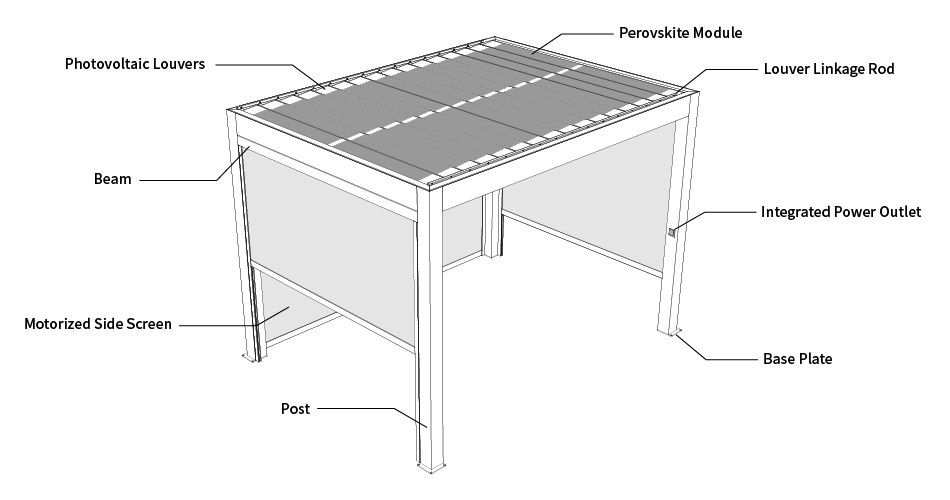
Fully integrated solar louvers reduce cabling but demand stricter electrical testing up front. Manual louvers lower control-system risk but increase labor during storm events. Heavier frames raise cost and anchor requirements but reduce deflection and noise. Choose the combo that fits your operation: low-maintenance venues pick fewer moving parts; hospitality spaces often accept higher testing and cost for smooth automation and guest comfort.
Make tests part of procurement so the delivered system works
Write test requirements into your contract, require signed test reports with photos and calibration records, and verify critical items yourself or with a third-party inspector. That discipline turns warranty promises into measurable reality and saves downtime. You get measurable safety, reliable performance, and predictable upkeep — the practical value that installers like Light Hunter build into their systems.