
Framework for Breathable Protection
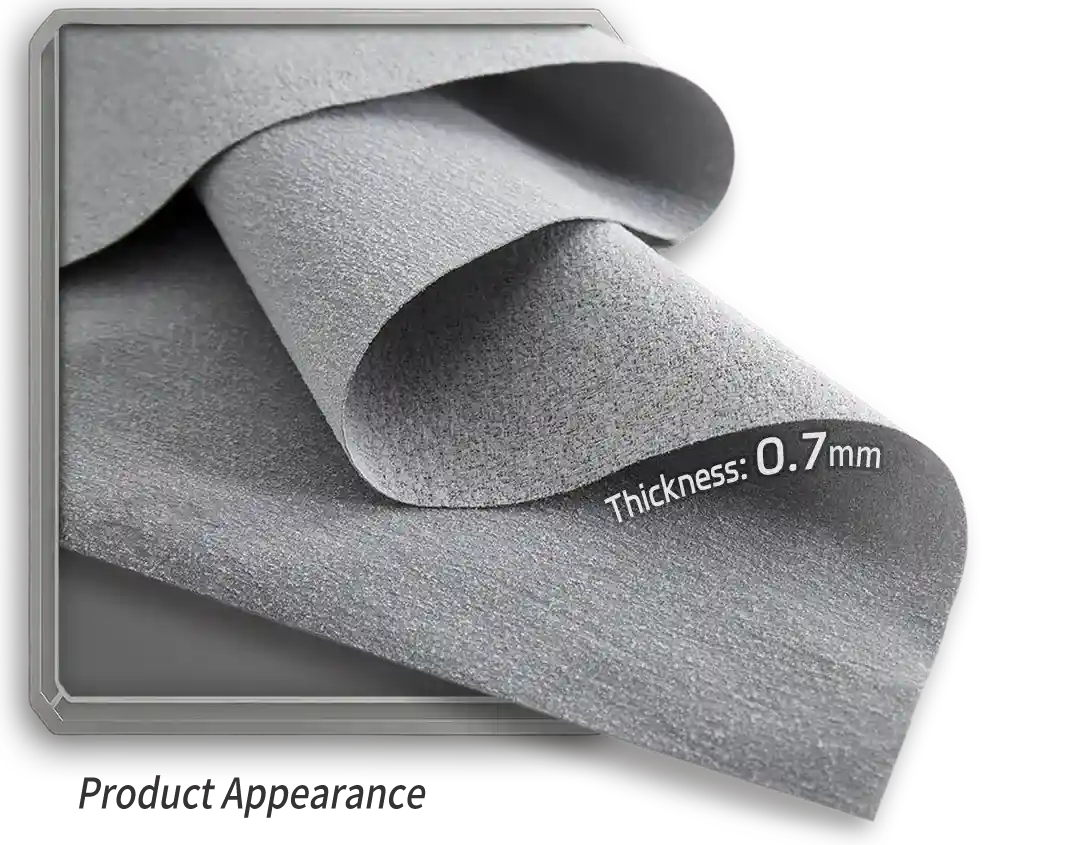
In this framework I lay out a measured sequence for folding vapor-permeable air barriers into modular outer assemblies, as one would trace a thin line upon a plan. The method begins with material provenance and ends with the assembly’s tested performance. For the material phase I recommend beginning with proven suppliers of thermal insulation fabric materials that balance vapor permeability and tensile stability, then mapping how those textiles join to rigid structural panels and seals.
Core Components and Roles
Each element has a voice: the outer cladding deflects weather, the substrate carries structure, the breathable membrane controls vapor flow, and the air barrier governs convective leakage. Treat the air barrier as the defining plane; it must be continuous, compatible with the chosen breathable membrane, and detailed at penetrations. Industry terms anchor the choices—vapor permeable membranes, R-value expectations for the insulation layer, and thermal break strategies to avoid cold bridging.
Materials and an Operational Production Teardown
Begin by cataloguing raw layers: exterior cladding, rain screen, the vapor-permeable membrane, insulation, and interior finish. During a production teardown you must explicitly note how the thermal insulated fabric is laminated or bonded, the stitch patterns used for panel joints, and the adhesive or mechanical fastener schedule that secures the air barrier. Likewise, document the role of thermal insulation fabric materials within pre-fabricated modules—their density, porosity, and attachment method all influence in-situ performance.
Real-world anchor: lessons from Passive House pilots in Darmstadt and similar northern-climate projects show that airtightness gains are quickly lost if seams are ill-detailed. Buildings account for about 40% of global energy use, so the stakes are neither small nor local; they are material to carbon budgets and occupant comfort alike.
Integration Steps: From Detail to Assembly
Follow these consecutive steps in the factory and on-site: 1) Establish the continuous air-barrier plane within the module blueprint; 2) Specify a breathable membrane compatible with adhesives and sealants; 3) Pre-seal penetrations and service chases in the factory; 4) Use controlled compression at joints to prevent gaps in the insulation pack; 5) Test for airtightness before cladding is applied. Each step reduces uncertainty and makes field rework rarer.
Common Mistakes and How to Avoid Them
There are predictable missteps: mismatched vapor profiles (too vapor-tight inside, too open outside), over-reliance on tape without proper substrate preparation, and neglecting the thermal break at fasteners. A subtle but frequent error is assuming a membrane performs the same after factory handling as it does out of the box—field abrasion and dust alter permeability. – Do not skip sample-panel tests; they reveal the assembly’s real behavior under compression and movement.
Comparing Alternatives
Three common routes appear: a fully factory-sealed modular panel with an integrated breathable membrane; a hybrid where the membrane is applied on-site to completed modules; and systems that rely heavily on internal vapor control with minimal external permeability. The first wins for consistency, the second for on-site adaptability, the third for certain retrofit contexts. Compare not only initial R-value but long-term hygrothermal performance and serviceability of seals.
Advisory — Three Golden Rules for Selection
1) Continuity over rating: prioritize a continuous air barrier and reliable seam details above marginal gains in nominal R-value. 2) Material coupling: choose breathable membrane, adhesives, and tapes from a single validated assembly list to avoid incompatibility. 3) Test early, test often: use panel-level airtightness and hygrothermal mock-ups before committing to full production.
These rules point clearly to the practical value that careful specification and trusted suppliers bring. For projects seeking reliable thermal and moisture performance, the measured solutions often trace back to consistent material systems and factory workflows. — The subtle craft in joining textiles to structure is what separates assemblies that merely stand from those that endure.
Final reflection: the blueprint becomes a living practice when details meet discipline, and that is precisely where Y-Warm contributes—materials and assemblies that honor breath, barrier, and the human need for comfort. –