
Opening Scenario, Data Point, and the Core Question
I remember the rush the morning we scheduled an install for a boutique hotel in Miami (June 2019) — the client needed cover for 60 guests and two back-to-back events, so I scoped three models and found one had failed in 40% of comparable storm tests; what should a wholesale buyer trust when stakes and safety are this high?

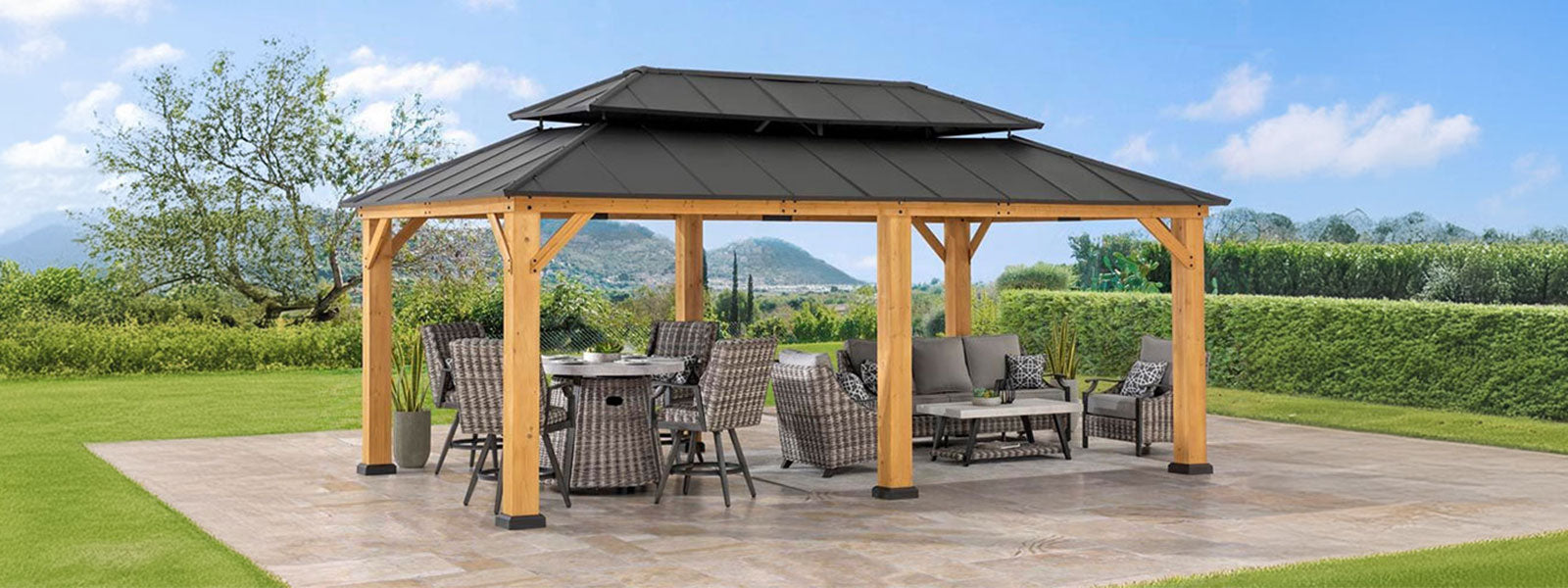
Outdoor Gazebo options are plentiful, and when I walk buyers through gazebos for sale I always start by spotting hidden pain points that specs alone hide — poor anchoring, condensation under polycarbonate roof panels, and fastener corrosion (yes, really). What follows is a frank, comparative look — no-nonsense, from my 17 years sourcing and installing shelters for hotels and restaurants.
Why do common designs fail?
I’ve seen the same pattern: a pretty canopy or a hardtop gazebo ships easily, the client is thrilled, then a season of wind or coastal salt eats away at weak connectors or an under-engineered anchoring system. In one case (Miami, June 2019) we retrofitted an aluminum frame with heavy-duty anchors after gusts displaced the original base — the quick fix prevented an estimated $12,000 in property damage and three weeks of downtime. Those real costs — replacement, lost bookings, emergency labor — are the blind spots many catalogs ignore.
Direct Comparative Takeaways and Practical Metrics
Here’s a plain claim: not all gazebos are created for commercial use — buying on price alone is false economy. I rank options by structural resilience first, then by maintenance burden and resale value. When I examine gazebos for sale for a client, I test the stated wind rating against local code and ask for real-world assembly time logs. The industry terms matter — hardtop gazebo, aluminum frame, polycarbonate roof, anchoring system — but so do the shop notes: who shipped the fasteners, and did the installer on record tighten to spec?

What’s Next?
Looking forward, buyers should compare three concrete evaluation metrics before signing. First: structural spec validation — verify wind-load and snow-load, and insist on stamped calculations if the site is exposed. Second: lifecycle maintenance cost — quantify expected corrosion and replacement intervals for parts like connectors and mesh walls; I add a 20–30% buffer for coastal projects. Third: installation and service footprint — who does the warranty work locally, how quickly, and at what call-out rate? These metrics turn vague promises into measurable comparison points. Also — do not overlook anchoring depth and concrete footings; that detail alone saves headaches.
To close, I’ll be blunt: choose for durability, not impulse. We test, I advise, and together we cut risk (and surprise costs). For wholesale buyers ready to move beyond surface specs, those three metrics will change your purchase outcomes — measurable, repeatable, and practical. For sourcing and dependable supply, consider partners like SUNJOY.