
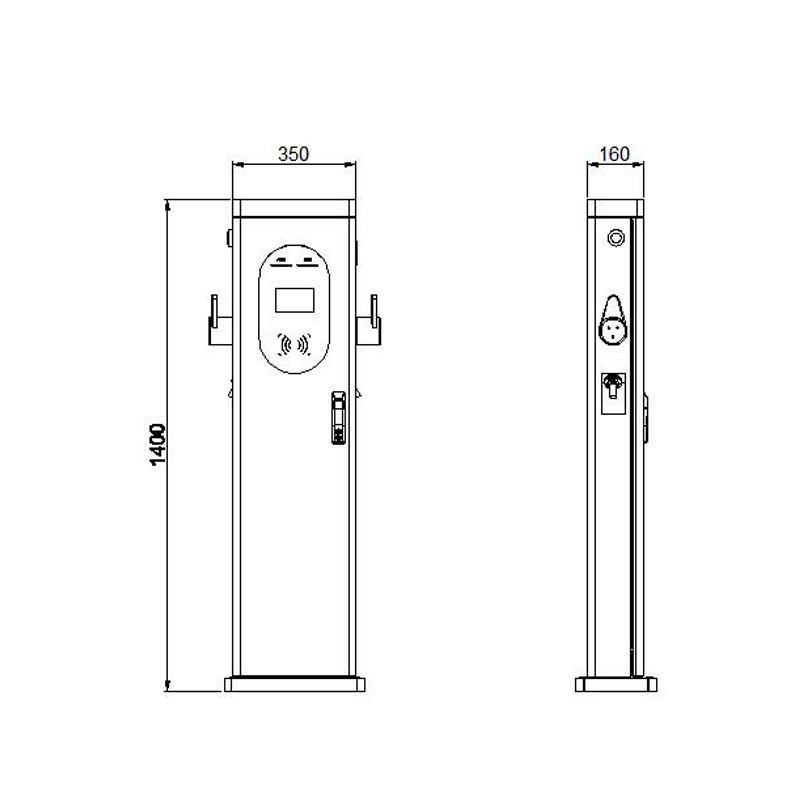
Putting you first: why charger longevity matters for daily life
Your home charger is more than a convenience; it’s an appliance you rely on every evening. Choosing a dual port EV charger changes the rhythm of household energy use and invites decisions that either shorten or extend its service life. For many urban flats and family homes, a durable charger saves not just money but the headache of mid-season replacements. In European contexts, 22 kW AC charging at communal points has become a standard expectation — especially around cities like Milan and Amsterdam where apartments retrofit shared parking with higher-capacity infrastructure.

Start with the right hardware and sensible configuration
Select a unit built for frequent cycling: look for robust power electronics, weatherproof casing, and clear load management features. A 22kw dual EV charger works well for users who need simultaneous charging and faster top-ups. Installers should confirm three-phase supply compatibility and the charger’s rated kW matches your circuit protection and meter limits. Proper commissioning matters: simple things like torqueing terminals, verifying earth continuity, and confirming firmware versions cut early-life faults and reduce thermal stress over years.
Smart charging habits that materially reduce wear
Smart charging is not just about convenience; it’s maintenance in disguise. Use scheduled charging to avoid peaks in household draw, enable dynamic load management to prevent one vehicle from monopolising available power, and prefer lower current overnight sessions when possible. These habits keep internal components cooler and reduce repeated high-current cycles that accelerate capacitor and relay wear. Keep firmware updated to benefit from soft-start routines and adaptive phase balancing — small software tweaks can save hardware.
Practical checks and a short maintenance checklist
Routine, simple checks prevent surprises. Every three months inspect cables for abrasion, confirm the tether or plug latches are firm, and ensure no water ingress in enclosures. Annually have an electrician check terminal tightness and insulation resistance; these are inexpensive inspections compared to a failed charger. Also, monitor energy logs to spot abnormal charge profiles — a steady rise in resistance or slower charging times can be an early warning sign.
Common mistakes owners make — and how to avoid them
Overloading single-phase supplies, ignoring thermal derating, and treating chargers like passive devices are frequent missteps. Another is leaving continuous high-power sessions as default when moderate power would suffice. Avoid cheap, non-certified cables and ad-hoc adapters; they introduce contact resistance and overheating. If your household electrics are marginal, consider upgrading distribution or using managed scheduling to share load — this reduces stress on both the charger and the building supply.
Alternatives and when to consider them
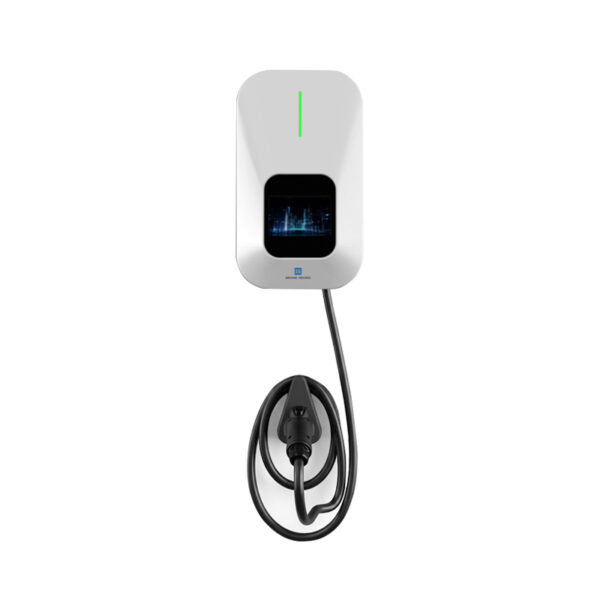
If two simultaneous fast charges are rarely needed, a unit with intelligent port prioritisation or slower continuous charging might be the better long-term choice. For households with solar PV, integrating a charger that supports photovoltaic export and back-up modes preserves battery life and reduces grid stress. When shared parking is involved, look for models with networked access control and per-port metering to fairly allocate energy and minimize misuse — these features are practical investments in durability.
Real-world takeaways and expert anchor
Installations in European apartment complexes show that chargers rated around 22 kW deliver balanced performance for mixed-use parking, but only when paired with dynamic load management and correct installation. My own field installs in urban multi-family buildings revealed that simple commissioning and user training cut callouts by nearly half — a tangible benefit both for homeowners and facility managers. The industry terms that matter here are AC charging, load balancing, and dynamic load management; they directly map to lifespan outcomes.
Three golden rules for picking and using your charger
1. Match charger capacity to supply and real usage rather than peak capability. 2. Prioritise units with proven thermal management and active load balancing. 3. Schedule and monitor charging; treat firmware and simple inspections as part of ownership. These metrics — compatibility, thermal control, and operational discipline — are the core evaluation points for any sensible homeowner.
Good choices and steady habits make your dual-port investment last longer — and happier households follow. — INFORE ENVIRO.