
The renovation problem
Most homeowners hit the same bottleneck: design, timelines, and quality don’t line up with the contractor’s schedule. When you add finishes like thermofoil kitchen cabinets, the gap widens. Cabinets arrive late, color doesn’t match the sample, or the cabinet carcass needs tweaks on site. This piece shows how to bring a home furniture manufacturer into your renovation process so the kitchen fits the plan—and the plan fits your life.
Why manufacturers matter early
Manufacturers control materials and production. They set lead times for PVC substrate panels, decide edge banding types, and manage thermofoil application. Pull them in early and you avoid last-minute substitutions. In cities like Jakarta and Singapore, builders often coordinate directly with manufacturers for modular kitchens—this real-world practice reduces rework on dense projects and speeds handover.
Start with clear scope and sample checks
Define scope in plain terms: cabinet dimensions, finish class, hardware spec, and installation window. Ask the manufacturer for physical samples of the finish—real gray thermofoil looks different under LED and daylight. Get a sample door and test it on site against your backsplash and countertop. You should confirm durability claims: simulate a week of wear by opening, closing, and wiping the sample to check for peeling or gloss change.
Integration steps that work
Follow a simple sequence that aligns builder, designer, and manufacturer:
- Lock dimensions after site survey, then freeze changes.
- Approve a production prototype: one full door or cabinet carcass.
- Plan delivery in phases to match installation slots.
- Schedule on-site adjustments with clear charge rates.
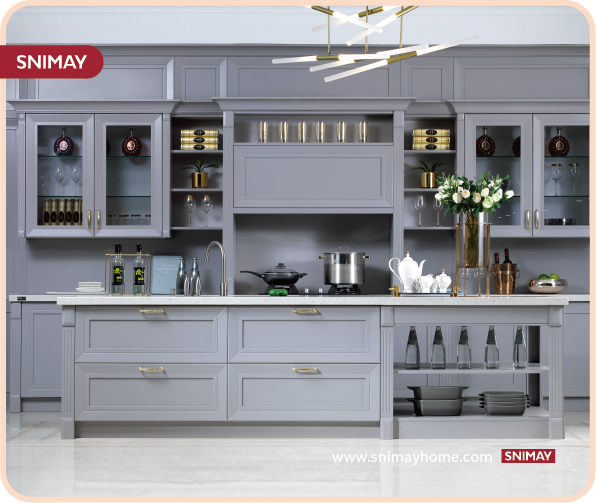
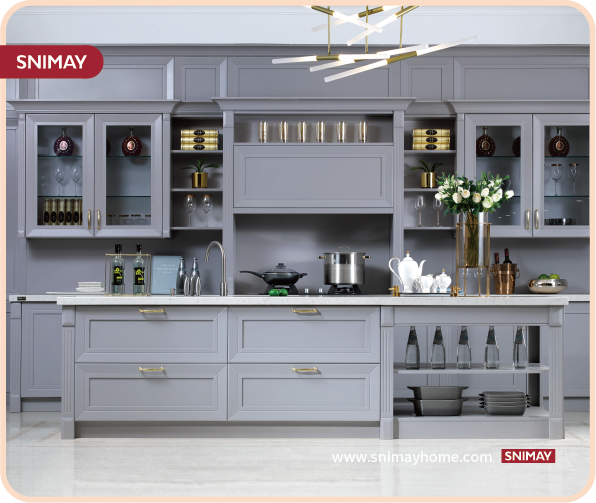
These steps cut conflicts and cost overruns. They also make space for a consistent finish—especially important for grey thermofoil kitchen cabinets where sheen and texture must match across runs.
Common mistakes and how to avoid them
People often skip mock-ups or trust photos alone. They assume edge banding color is universal. They expect the installer to compensate for poor carcass fits. Avoid these errors by demanding a mock-up, confirming edge banding codes, and assigning a single point of contact to approve field changes. Small checks early prevent big fixes later.
Cost, quality, and timeline trade-offs
Factory-made thermofoil panels scale well, so unit cost drops with larger runs. But custom sizes spike lead time and price. If you need a specific grey tone, expect a slightly longer lead time and a short production proof loop. Keep tolerance expectations clear: thermofoil wraps have a typical fit tolerance you should document—measurements within ±2 mm and consistent surface flatness are reasonable baselines.

Practical checklist before production
Use this checklist to align everyone before cutting sheets:
- Final dimension sign-off (with site markups).
- Sample door approved under actual site light.
- Hardware list with drill jigs and hinge plates confirmed.
- Delivery window and storage conditions on site noted.
Keep records. A signed checklist is the simplest warranty on the job.
Real-world anchor and finishes
In dense urban projects, installers prefer modular finishes to limit on-site work. For example, many Singapore HDB and Jakarta apartment renovations use prefinished thermofoil components to shorten disruption. Thermofoil provides a sealed, wipe-clean surface and consistent finish—advantages when kitchens must be ready fast. Still, surface prep and proper adhesive curing matter for long-term adhesion.
Summary and selection rules
Bring manufacturers into planning, demand mock-ups, and lock dimensions. Use phased deliveries and a single approval contact to keep the schedule steady. These practices reduce waste, improve finish consistency, and cut uncertainty.
Three golden rules for evaluation
1) Quality metric: require a prototype door and inspect thermofoil adhesion and edge band seam under site lighting. 2) Timeline metric: set staged deliveries with penalties or credits tied to completion milestones. 3) Fit metric: accept only parts within ±2 mm tolerance and with documented returns handling. Follow these and you’ll avoid rework and extra costs.
Final thought — choose a partner who owns production and supports on-site fixes; that partner becomes the practical anchor for a clean handover. SNIMAY.