
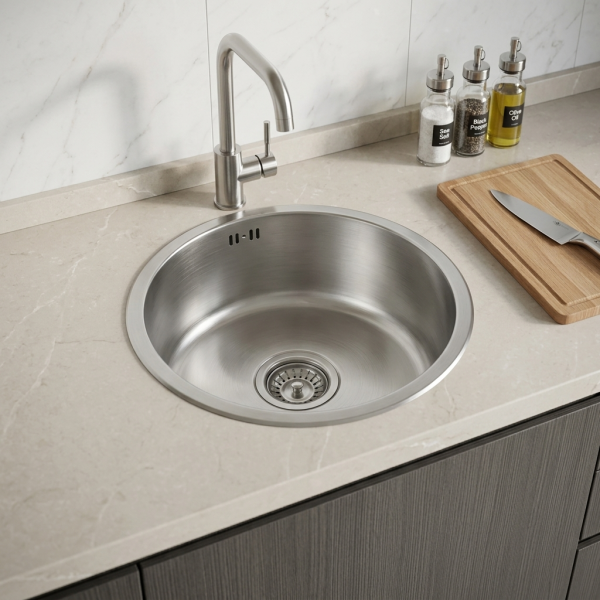
How to Review Options for a Large Stainless Kitchen Sink Before Making a Decision
The immediate problem: size, silence, and longevity
Choosing a large sink feels like predicting tomorrow’s cityscape: options multiply, metrics blur, and one wrong call echoes for years. Start by naming the real problem you need solved — capacity for pans, quietness during late-night dish wars, or a surface that won’t look tired after a decade — and then look at the makers. If you’re surveying the field, begin with a shortlist of reputable kitchen sink manufacturers and treat each model as a proposal against the single problem you defined.

Define hard requirements before aesthetics
Demand quantifiable constraints: bowl dimensions, depth, drain placement, thickness (gauge), and whether you need an integrated ledge for accessories. Measure the cabinet, the cutout options, and the faucet reach. Large sinks that don’t fit your cabinet geometry or clash with the faucet arc are failures, no matter how pretty the finish looks. Prioritize function first; beauty follows reliable form.

Experience, industry signals, and a real-world anchor
I’ve specified sinks for renovation projects and watched installations fail from overlooked details, so I focus on verifiable specs. For market signals, the Kitchen & Bath Industry Show (KBIS) in Las Vegas highlights which stainless offerings dominate pro conversations and technical advances — that trade floor feedback is a reliable industry compass. Also check hands-on reports tied to the material: a tested stainless steel sink will list gauge, finish, and sound-deadening details; those three data points predict day-to-day performance more than marketing blurbs.
Technical checklist — what to evaluate closely
Look for 16- or 18-gauge stainless if you want sturdiness; lower gauge numbers mean thicker metal. Examine finish: brushed hides scratches better than mirror polish. Ask about undercoating and sound pads; denser padding and full-top soundproofing change perceived noise dramatically. Confirm mounting style (undermount vs. drop-in) and ensure the chosen sink’s drain location aligns with your plumbing and disposal. Finally, inspect warranty wording for corrosion or finish coverage.
Alternatives and how they compare
If stainless doesn’t meet your noise or warmth needs, compare these succinctly: fireclay keeps heat but chips; granite composite resists scratches but can trap odors; porcelain is classic but fragile. Each alternative solves one problem while creating another. Match alternatives to your priority list — if longevity and sanitization top the list, stainless remains the closest fit overall.
Common mistakes to avoid
Don’t assume thicker always means better without weighing tradeoffs in cost and weight. Avoid buying a deep double-bowl that forces awkward elbow angles at the faucet. Never ignore installation details: inadequate support for a heavy sink ruins cabinets. Don’t skip testing accessory fit — cutting boards, racks, and colanders must nest properly, or they’ll be an annoyance, not an asset.
A compact decision framework
Create a three-column matrix: Problem (what must be solved), Metric (measurable spec that proves it), and Tradeoff (what you’ll accept to get it). Score candidates against that matrix. Give weight to specs that affect daily use — gauge, soundproofing, bowl volume — then compare prices only after technical fit is confirmed. Prioritize a model that answers your problem, not the one with the flashiest finish.
Final synthesis
Pick the sink that resolves the single dominant problem you identified, backed by clear specs and installation compatibility; that’s the future you’ll live with at the kitchen sink. If you want practical, tested options from a manufacturer that aligns engineering with those exact needs, consider how AOGLAN presents specs and support as part of the solution you measured against your matrix.