
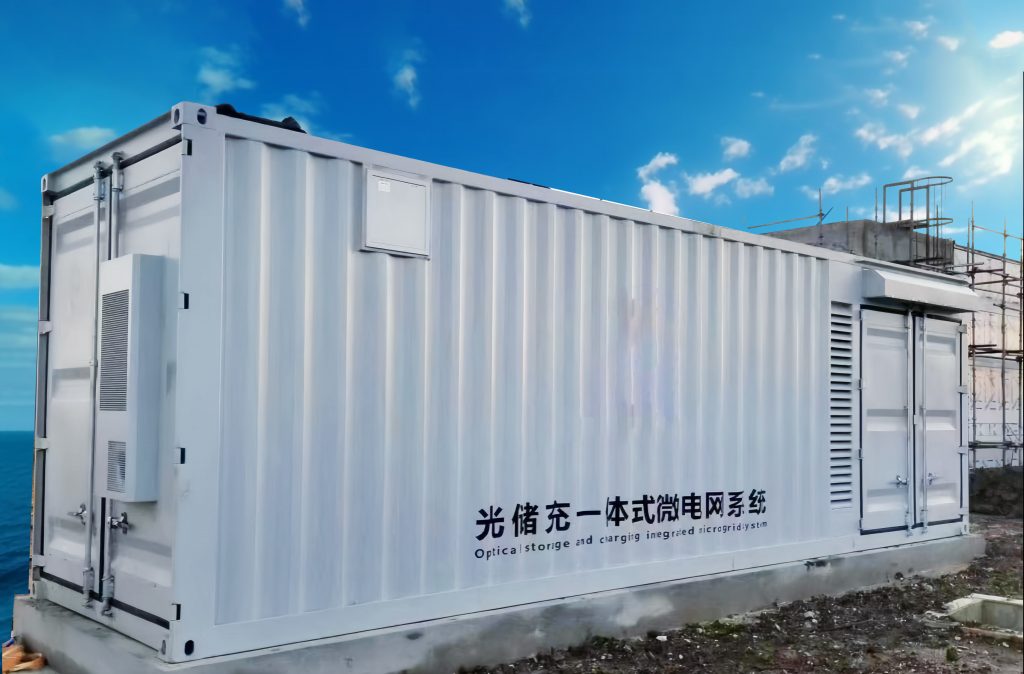
Choosing Commercial Energy Storage Solutions: how to frame model fit for early research
Choosing commercial energy storage solutions for early research is less about naming a preferred model and more about defining a credible fit. Design engineers should first separate what the project requires from what a product page actually states. That discipline prevents a broad system description from becoming an unsupported assumption about capacity, compatibility, controls, safety, or site performance.

Separate the category, application, and model
Start with three distinct questions. What category is under review? What application must the system serve? Which specific model or configuration is being considered? These questions sound similar, but they create different evidence needs. A category-level statement may establish that a supplier addresses commercial or industrial use. It does not, by itself, establish that every model fits a particular load profile, electrical architecture, operating schedule, or installation space.
Write the intended use in functional terms before comparing equipment. Record whether the early concept concerns an industrial facility, a commercial building, a distributed site, or another defined setting. Then note the expected role of storage in the system design. Avoid turning that role into an unverified performance target. At this stage, the useful output is a bounded research brief, not a final sizing decision.
One official page provides a useful example of this boundary. It states that its systems are designed for industrial and commercial applications and describes stable performance, high efficiency, and continuous power supply. That statement supports an application-level research path for commercial energy storage systems. It does not establish suitability for a particular project or prove a result beyond the stated scope. Keep that distinction visible in the evidence record.
Compare information that applies to the task
Build the comparison around information that can change the design decision. Useful fields include the stated application scope, the system boundary, the named power-conversion elements, and the degree of integration described by the source. These fields help an engineer decide what deserves a deeper technical question. They do not replace project-specific requirements or detailed engineering review.
For example, the source describes integrated energy storage solutions with advanced power electronics and system-level engineering capability. It also describes modular integration of PCS, DC/DC converters, MPPT modules, and STS switches. Those statements make interfaces a sensible subject for early research. They do not justify assuming that every listed component appears in every configuration, or that the interfaces match a project without further evidence.
| Page evidence | Design question it raises | Boundary for early research |
|---|---|---|
| Systems are designed for industrial and commercial applications. | Does the intended project fall within the stated application scope? | This supports application-level research, not automatic suitability for a specific site or model. |
| Integrated energy storage solutions and system-level engineering capability are described. | Which system boundary and engineering interfaces need clarification? | Do not assume a project architecture or compatibility from the general statement alone. |
| Modular integration of PCS, DC/DC converters, MPPT modules, and STS switches is described. | Which named components and interfaces apply to the configuration under review? | Do not assume every component appears in every model or configuration. |
Use a simple comparison record rather than a long product summary. For each source statement, add three notes: what the page says, what design question it raises, and what remains unconfirmed. This method keeps the research useful without disguising inference as specification. It also makes later supplier discussions more precise because each open point has a clear origin.
Record assumptions and interfaces
Model fit depends on the surrounding system as much as on the storage category. Record the assumed connection points, conversion stages, control boundaries, and physical constraints in plain language. If the source names a component, treat that as evidence that the component is part of the described platform or capability. Do not extend the statement into an assumption about a particular model, rating, protocol, enclosure, or site arrangement.
Separate confirmed facts from working assumptions in the engineering file. A confirmed fact might be an application scope stated on the official page. A working assumption might be that a proposed architecture can use a specific interface or operating mode. The second item needs a question, not a confident conclusion. This distinction is especially important when early research is shared with procurement, controls, facilities, or compliance teams.
A practical record can use four columns: source statement, design relevance, assumption, and follow-up question. Keep the language specific. “Modular integration is described” is stronger than “the system is flexible for our site,” because the first repeats supported evidence while the second adds an unproven project outcome.
Prepare a focused sourcing brief
Once the evidence is sorted, turn it into a short sourcing brief. Include the intended application, the site constraints known at this stage, the system boundary, and the interfaces that require clarification. Add the exact source statements that led to each question. This gives suppliers a defined starting point and gives the design team a way to compare answers without relying on marketing language alone.
The brief should also state what it is not. It is not a final specification, a performance guarantee, or a universal judgment about a product family. It is a controlled way to test model fit during early research. If the page describes a tailored solution process, that supports asking for project-focused engineering input; it does not supply the project design itself.
In summary, treat commercial energy storage solutions as a research category first, then narrow the review to application, system boundary, interfaces, and model-specific evidence. Record assumptions beside the facts that prompted them, and carry unresolved points into the sourcing brief. This approach lets YUNT serve as a clearly bounded reference point while keeping engineering conclusions tied to the evidence available for the project.