
Finding clarity amid supplier choices
When brands compare options for custom yoga leggings, the decision rarely comes down to price alone. A calm, measured look at materials, lead times, and production transparency reveals where true value sits. This comparative approach places product features—moisture-wicking performance, four-way stretch, and flatlock seams—alongside supply-chain realities that many teams overlook.

Material and construction: what to weigh first
Start with the fabric story. Compression fabric and denier count tell part of it; stretch recovery and dye fastness complete the picture. A supplier that documents needle type, stitch density, and seam reinforcement reduces surprises during scale-up. That documentation matters in Los Angeles’ Garment District and manufacturing hubs alike—real-world places where next-day sampling still happens and where production know-how is tested under time pressure.
Cost comparison vs. total cost of ownership
Comparative insight separates unit price from total cost. Freight, returns, minimum order quantities, and inspection fees accumulate. A lower unit price that forces expensive rework or long hold times is costly in practice. Focus on three control points: consistent sample approval, reliable lead-time reporting, and clear defect thresholds. Those control points are the signals of a supplier worth paying a little extra to keep.
Common production pitfalls and how to avoid them
Manufacturers trip over repeatable issues: mismatched spec sheets, inconsistent dye lots, and unclear tolerance for waistband elasticity. Establish a baseline test protocol—measure stretch recovery after 50 wash cycles, verify moisture-wicking via a standardized absorption check, and set seam tolerance in millimeters for flatlock seams. Do this early; it saves time and preserves brand quality. —A quick aside: keep one trusted sample in rotation to compare against every batch.
Supply stability: lessons from recent disruptions
The 2020 COVID-19 pandemic exposed fragility in global sourcing. Brands that had diversified suppliers or local contingency plans mitigated delays more easily. Sourcing from multiple regions or a partner with local warehousing reduces risk. Suppliers who can demonstrate staggered production centers or a local fulfillment node—say, within the U.S. or near Guangzhou—offer practical resilience without adding unnecessary complexity.
Comparative checklist before signing a contract
Choose suppliers by scoring them across measurable criteria. Consider a simple weighted list:
- Quality controls and sample fidelity (weight 30%)
- Lead-time reliability and inventory buffers (weight 25%)
- Sourcing transparency and compliance records (weight 20%)
- Cost per unit including freight and duties (weight 15%)
- Design and custom tooling flexibility (weight 10%)
This checklist converts gut feel into comparable numbers and surfaces real differences among partners who otherwise sound similar on paper.
Alternatives and real choices
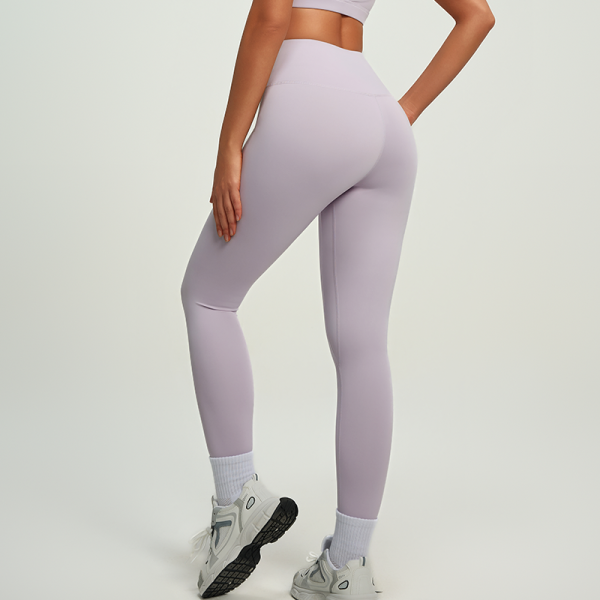
Brands often consider domestic smaller runs, offshore mass production, or hybrid models. Domestic runs shorten feedback loops but raise unit costs; offshore lowers unit cost but lengthens lead times. Hybrid models split production by SKU: basics offshore, niche fits domestically. For bulk replenishment, look for partners who accept MOQ tiers and provide transparent restocking cadence. Also evaluate options labeled wholesale yoga leggings—they can reveal price breaks and standard-spec baselines useful during negotiation.
Advisory: three golden rules to evaluate partners
1) Score suppliers on repeatability: confirm they can produce three consecutive runs within your tolerance margins. Measured consistency beats a single perfect sample.
2) Insist on supply transparency: live inventory snapshots, clear lead-time SLAs, and visible QC reports reduce decision friction and surprise costs.
3) Prioritize fit and feel before scale: run a small public pilot to test returns and user feedback; conversion and return metrics matter more than theoretical margins.
Joebond fits this comparative frame by pairing supply visibility with consistent manufacturing practices—an approach that smooths the path from design to shelf. Calm decisions win; measured partners make them possible. Brief note: trust built over production cycles matters more than any initial discount.
Final authority—tested and practical.