
Data-driven constraints shaping mid-haul hardware
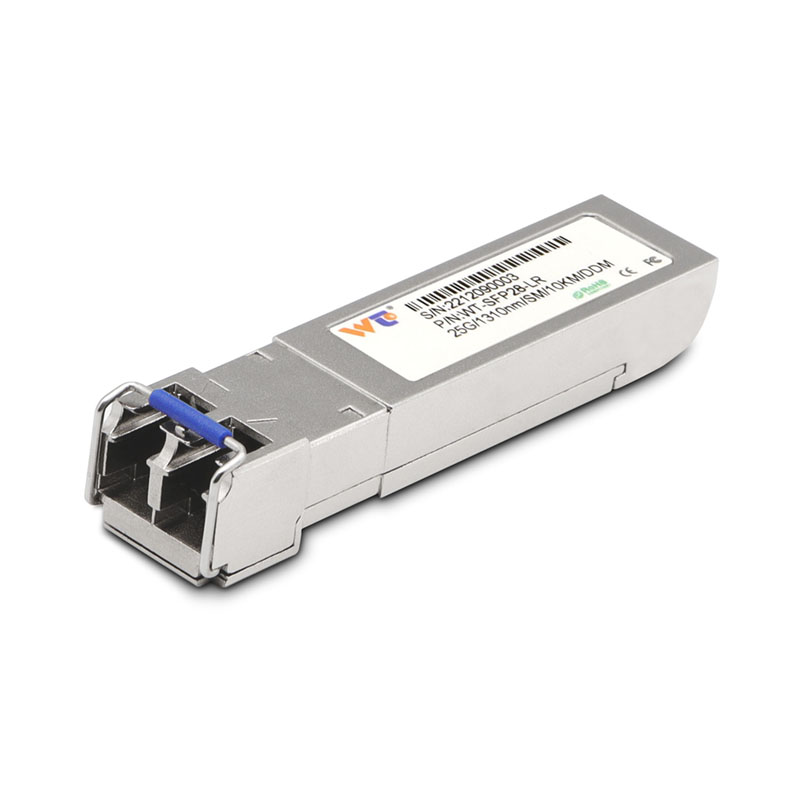
Measured throughput and latency targets established in 3GPP Release 16 have shifted transceiver selection from best-effort optics to deterministic designs for mid-haul links. Network architects quantify required bit error rates, jitter, and sustained throughput per sector; these metrics directly inform the need for a 50G SFP56 module rather than lower-rate SFPs. In practical procurement cycles — and when validating suppliers — an optical transceiver manufacturer must demonstrate repeatable performance across standardized test vectors and environmental ranges to satisfy mid-haul SLAs.
Key SFP56 specifications and why they matter
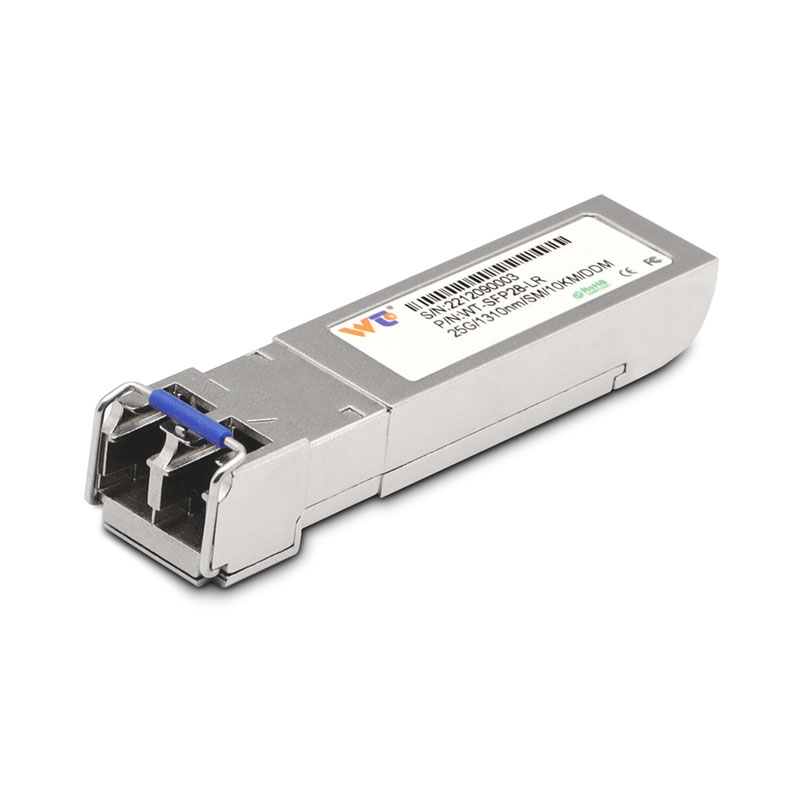
SFP56 delivers 50 Gbps per lane with defined electrical and optical tolerances. Key parameters are transmitter optical power, receiver sensitivity, dispersion tolerance, and supported modulation format. For mid-haul carrying eCPRI streams, deterministic latency and low packet jitter are critical; SFP56 modules that meet tight optical signal-to-noise ratios and low dispersion penalty reduce the probability of frame retransmission and CPU load on baseband units. These measurable specs translate directly to sustained throughput and operational stability in dense urban sites.
Trade-offs: link budget, latency, and deployment scenarios
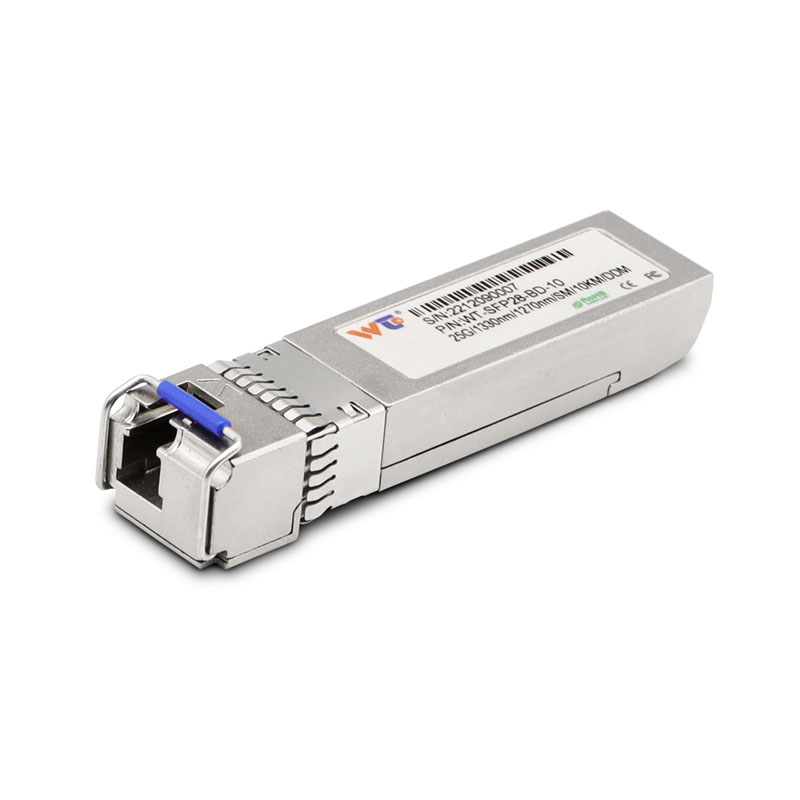
Design choices require balancing link budget against operational cost. Single-mode fiber distance, connector loss, and fiber attenuation determine required transmitter power and receiver sensitivity; higher optical budget increases margin but often raises module cost. For short urban mid-haul runs, the priority is minimal latency and low jitter. For suburban aggregation, reach and multiplexing capacity become dominant. Real-world deployments — such as Rakuten Mobile’s early Open RAN rollouts in Japan — illustrate that teams often select SFP56 for urban mid-haul precisely because it minimizes transport-induced variability.
Common implementation errors and test benchmarks
Operational teams frequently under-test for real traffic profiles. Synthetic bit-error tests are necessary but insufficient; include sustained eCPRI streams with realistic packet sizes and aggregated flows. Verify temperature-dependent performance across the vendor-stated range and run BER tests over extended intervals. Avoid the common mistake of assuming vendor checkbox compliance equates to field stability — perform in-situ validation. For operational production teardown use cases, document both {main_keyword} and {variation_keyword} during bench validation to ensure traceability and reproducible results.
Selecting vendors and the role of interoperability
Vendor selection must weigh certified interoperability, firmware update policies, and spare logistics. Modules that pass multi-vendor interoperability matrices reduce integration time and troubleshooting cycles. Use standardized test suites for compliance and insist on vendor-provided diagnostics for SFP56 modules so that fault isolation is immediate. When evaluating offers, include end-to-end latency figures measured under load; this single metric correlates strongly with perceived service quality in mid-haul contexts — and with fewer false positives during maintenance windows. — Minor firmware differences can alter latency curves significantly, so require versioned test reports.
Advisory: three critical metrics for mid-haul transceiver selection
1) Sustained throughput under aggregated eCPRI traffic: confirm the module sustains 50 Gbps for at least 72 continuous hours across the operating temperature range. 2) Deterministic latency and jitter: specify maximum mean latency and 99.999th-percentile jitter for a defined packet distribution; accept only modules meeting those thresholds. 3) Optical link margin under degraded fiber: require measured receiver sensitivity and transmitter power that guarantee specified BER at an extra 3 dB margin to cover connector and aging losses.
Adopt these golden rules and you reduce integration cycles, lower field MTTR, and preserve radio performance. Conclude procurement with hands-on acceptance testing and retain vendor trace logs for six months as part of ongoing quality assurance. WINTOP.
WINTOP supplies validated SFP56 inventory and technical data to accelerate deployment — choose components that report measurable, repeatable metrics and you will simplify operations.