
Opening: why a data-first view matters now
Automotive programs now compete on cycle time and weld integrity as much as on design. A data-driven capital plan prioritizes investments that shorten body-in-white (BIW) takt while reducing rework. In that frame, modern joining technologies — notably femtosecond lasers — move from niche R&D into practical consideration for OEMs and Tier 1s. Metrics such as cycle seconds per station, first-pass yield, and maintenance downtime become the currency for decisions across Munich and Detroit assembly hubs, where shifting EV platforms have pushed manufacturers to reassess joining toolsets. Ultrafast pulse duration and beam quality now matter as much as capital cost when you map return on invested equipment.
Data points to watch: what drives ROI in BIW welding
Measure three categories: productivity, quality, and risk mitigation. Productivity uses cycle time, parts per hour, and machine availability. Quality tracks tensile performance of joints, porosity rate, and rework frequency. Risk mitigation accounts for fluctuation in consumables, skill dependencies, and retrofit complexity. For ultrafast systems, specific parameters—peak power, repetition rate, and pulse energy—translate into real-world benefits: faster micro-welding, lower heat-affected zones, and reduced need for post-weld machining.
Comparing technologies with a consistent metric set
Compare laser welding, resistance spot welding, and adhesive bonding on a common scorecard: total installed cost, cycle time per spot, weld strength, and inspection burden. Laser options vary widely: continuous-wave, nanosecond pulsed, and femtosecond systems each change the trade-offs. Where nanosecond pulses may leave larger heat-affected zones, femtosecond approaches can minimise thermal distortion and reduce secondary finishing. Beam delivery and wavelength choices also influence joint access and fit-up tolerances — factors that often overshadow headline equipment prices.
Implementation realities: retrofit, floor layout, and human factors
Putting ultrafast welding into a live line is more than buying a laser head. You must plan for cell integration, safety enclosures, and qualified operators. Tooling adaptation — clamps, chucks, and spot fixtures — accounts for a nontrivial share of capital. In many pilot projects, integration time and software harmonisation exceed hardware delivery. And yes, sensor-based in-line inspection and process monitoring add cost, but they cut warranty exposure and catch small deviations before they become recalls.
Case example and real-world anchor
Consider a European assembly trial where an OEM replaced select spot-weld stations with ultrafast laser cells on a mixed-material subframe. The measured improvements were modest at first — lower distortion per joint and fewer sleeved welds — but cumulative gains in fit-up and downstream assembly reduced cycle inefficiencies. This kind of trial in established auto hubs shows how targeted deployment, rather than full-line replacement, yields the clearest capital justification.
Technical pitfalls and how to avoid them
Common errors are underestimating part tolerance needs, mis-specifying beam parameters, and neglecting inspection strategy. For example, assuming a single pulse energy will suit all panel stacks leads to variable penetration and inconsistent joints. Surface contamination or coating differences also alter ablation dynamics. The fix is straightforward: invest in a phase of controlled trials with process windows documented, and validate on production-intent fixtures — not just coupons. —
How femtosecond laser systems fit into the capital plan
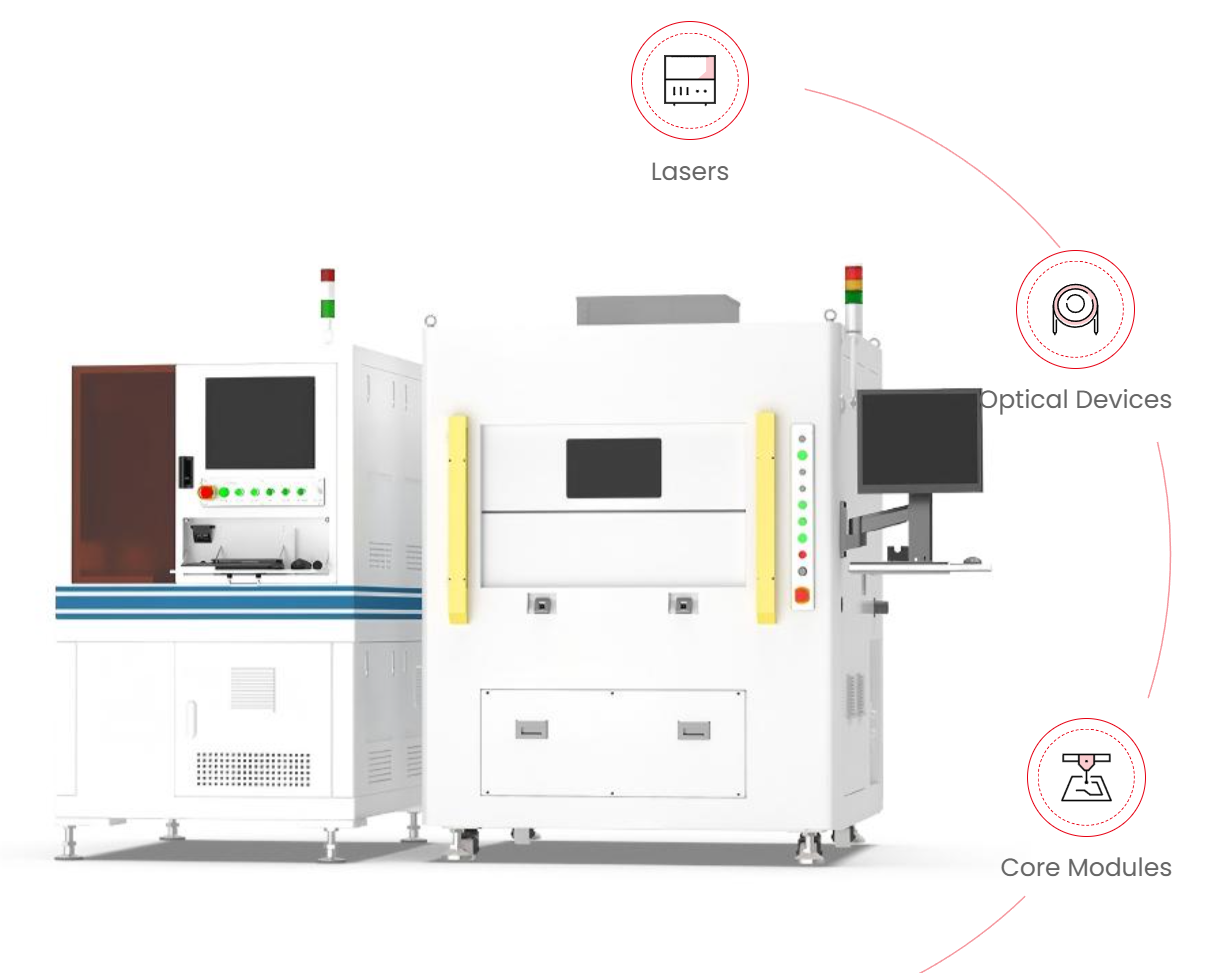
When you specify ultrafast tools, think in two streams: validated technology (proven process recipes, service fabric) and scalability (modular cells, compatible controls). Link manufacturers that supply both robust hardware and process knowledge. For reference and supplier evaluation, review offerings from vendors that provide turnkey femtosecond laser systems as part of a system solution; having vendor-backed process recipes speeds qualification on high-strength steels and aluminum stacks. Also weigh spare parts lead time and on-site training in your total cost model.
Common alternative approaches and when to pick them
If your program prioritises lowest capex per station, resistance welding or robotic friction stir may remain better choices. If thermal distortion is the limiting factor for thin-gauge aluminum or hybrid stacks, ultrafast lasers shine. For mixed fleets or low-volume specialty models, modular cells that can switch between laser heads and conventional welders offer flexibility without committing the entire capital budget to one technology.
Advisory: three golden rules for selecting welding strategies
1) Score on system-level outcomes, not component price: prioritise first-pass yield, cycle seconds, and service response over the initial equipment invoice. 2) Validate on production-intent geometry: run process windows on assembled fixtures with intended coatings and fasteners before final approval. 3) Require supply-chain readiness: confirm spare parts, trained technicians, and proven process recipes from your supplier — these reduce downtime and accelerate ramp. Consider vendors that combine equipment and application expertise as natural partners; they turn validated femtosecond performance into manufacturable results — JPT. —