
Why a framework matters
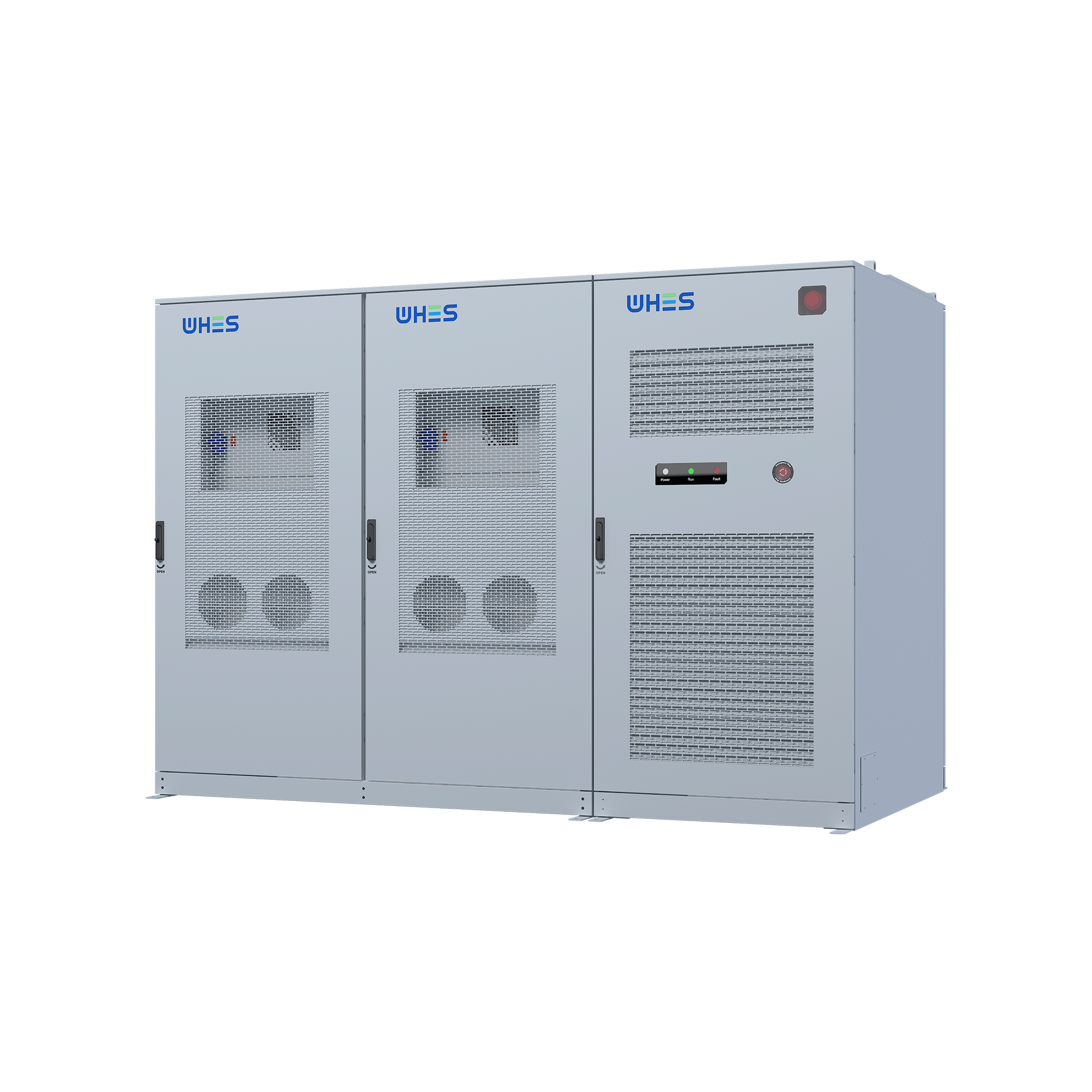
When we design modular battery systems, we need a repeatable decision path so choices don’t become one-off firefights. A framework helps us translate performance goals — like round-trip efficiency (RTE) and thermal stability — into concrete specs, tests, and automation checks. If you’re evaluating a rack-based commercial energy storage unit, this framework keeps discussions technical, auditable, and deployable across sites.
Core trade-offs: RTE versus thermal stability
Round-trip efficiency is about energy in versus energy out; thermal stability is about safety margins and the system’s ability to avoid thermal runaway under fault conditions. Higher RTE often nudges you toward chemistries or pack designs that operate at tighter thermal windows, while aggressive thermal management can shave off efficiency. We treat these as levers to tune, not absolutes.
- RTE considerations: inverter losses, DC/DC conversion, internal resistance, and state-of-charge (SoC) operating window.
- Thermal considerations: cell chemistry selection (e.g., LFP vs NMC), battery management system (BMS) reaction time, and active cooling versus passive heat rejection.
Framework steps: translate goals into specs
Here’s a practical sequence we follow when specifying a modular lithium battery system. Each step maps to verifiable acceptance criteria so automation can validate compliance on delivery.
- Define mission profile: cycle depth, power vs energy ratio, expected charge/discharge schedule, and ambient conditions.
- Set target RTE: pick system-level RTE (including inverter and balance-of-plant losses). Express it as a minimum guaranteed percentage over representative cycles.
- Quantify thermal envelope: maximum steady-state temp, allowable transient excursions, and worst-case fault temperature.
- Choose cell chemistry and module architecture: weigh LFP for thermal robustness against NMC for energy density, with explicit trade-off rationale.
- Specify BMS behavior: SoC limits, cell balancing cadence, fault thresholds, and telemetry rates for anomaly detection.
- Design thermal management: passive conduction paths, forced-air or liquid cooling, and fire-suppression integration where required.
- Automate validation: define test scripts (charge/discharge cycles, thermal soak, abuse tests) and pass/fail thresholds for CI-like acceptance.
Key specification checklist (what we put in the RFQ)
Turn each framework step into measurable clauses. The RFQ should include:
- Guaranteed system RTE over a prescribed cycle (e.g., 0.2C charge and discharge at 25°C).
- Maximum cell/module steady-state and transient temperatures with defined ambient bounds.
- BMS fault detection and response times, and how it isolates failed modules.
- Cooling strategy and required service access for heat-exchanger maintenance.
- Data and control interfaces (Modbus, CAN, or Ethernet), plus expected telemetry cadence for remote monitoring.
- Warranty terms tied to cycle life, capacity retention, and thermal events.
Automation and testing: how we make acceptance objective
We build an automated acceptance pipeline that runs through electrical and thermal scripts before sign-off. Tests include IEC-style charge/discharge profiles, thermal soak at worst-case ambient, and BMS fault injections. The automation captures logs, generates time-series plots, and compares actual RTE and temperature curves against spec. If something fails, it creates a ticket with the exact failure window so remediation is traceable — just like a CI job that fails fast and tells you why.
Common mistakes and pragmatic mitigations
Teams often assume lab-level RTE and thermal performance will translate to field deployment — and that’s where reality bites. Real installations see higher ambient temps, partial shading (for co-located PV), and compromised airflow. Don’t accept vendor RTE numbers without a defined test profile. Likewise, vague BMS descriptions are a red flag: you need response times and isolation strategies in writing. Test early with a small pilot — automate the telemetry comparison against the expected mission profile so you catch deviations before scale.
Also, be cautious about interface mismatches between the energy management system and the vendor’s control API — they cause weeks of integration rework. —
Real-world anchor: why this matters in the field
During recent heatwave seasons in California, operators relied on modular storage to smooth peak demand and support microgrids. Those deployments showed two things: systems with conservative thermal design and robust BMS that prioritized containment tended to survive stressed conditions intact; systems optimized solely for peak RTE sometimes required derating under elevated ambient temperatures. If you’re evaluating module vendors, look at field performance during regional stress events and ask for incident logs from past deployments of industrial battery storage systems — practical evidence beats glossy spec sheets.
Alternatives and when to choose them
Choices often reduce to: prioritize RTE for tightly constrained AC-coupled sites, prioritize thermal robustness for safety-critical or high-ambient projects, or split risk with hybrid cells. If uptime under harsh conditions matters more than absolute efficiency, pick LFP and a conservative SoC window. If footprint and energy density drive ROI, NMC with aggressive cooling may be appropriate — but insist on continuous thermal monitoring and faster BMS isolation. We also consider modular redundancy: smaller, parallel modules can limit fault propagation at some RTE cost.
Advisory: three golden evaluation metrics
When finalizing your spec and vendor selection, evaluate on these three quantifiable metrics:
- Operational RTE under your mission profile (measured, not rated) — this is the true efficiency you’ll realize.
- Mean time to isolate (MTTI) a thermal or cell fault — lower is better and indicates a resilient BMS.
- Field-proven derating behavior: how performance changes across the ambient temperature range and under partial failure scenarios.
These metrics tie directly to both cost and safety outcomes. If they look good on paper and in automated test runs, your deployment risk drops considerably.
WHES offers products and documented test data that fit into this framework naturally, making vendor selection a technical alignment rather than a leap of faith. —