
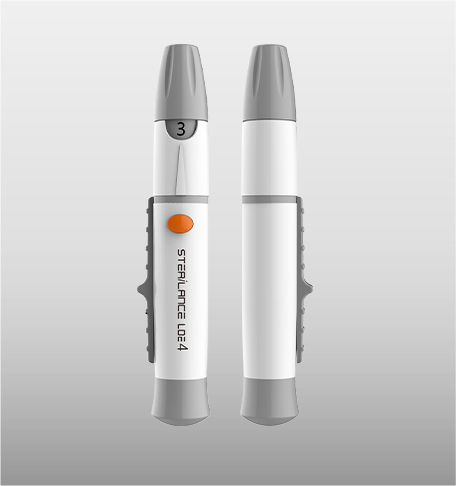
The Hidden Costs Behind a ‘Good Enough’ Lancet
Most buying mistakes in point-of-care start long before the nurse opens the pouch. With safety lancets, a tidy spec sheet can hide risks and small costs that quietly add up. I benchmark every safety blood lancet against what I have seen on real wards, not just what the brochure claims. Scenario + data + question: during a packed OPD in Pune in July 2023, my team ran 280 capillary samples in three hours; two near-misses and five repeat sticks followed—would you call that acceptable? I would not, and neither should any wholesale buyer who answers for uptime, training budgets, and incident logs (mind you). Let us set the record straight before preventable issues turn into line items you cannot defend.

Where do traditional lancing tools fail?
I have spent over 17 years advising hospital chains and diagnostics distributors across Mumbai, Delhi, and Bengaluru, and one pattern keeps surfacing: legacy spring-and-cock lancers fail at the point of pressure. The depth setting says 1.8 mm, yet operator grip shifts under gloves, and you end up with shallow sticks, clotting delays, and repeat attempts. In November 2019 at a community camp in Thane, a 28G needle with a vague depth stop drove our repeat rate to 11%, which cost ₹4,200 in extra strips in one evening—never mind patient discomfort. Auto-retraction is another trap; some devices retract late, so the needle hangs for a fraction—just enough for a fidgety child to brush it. That is how near-misses become documented exposures. Then there is gauge-choice drift: 30G feels gentler but can stall capillary flow in cold rooms; 23G solves flow but bruises fragile skin. To be honest, I have seen procurement chase the lowest unit price while ignoring failure rate, EO sterilisation residuals, and the absence of a clear tamper-evident cap. Hold on—lab compliance also bites: poorly etched lot codes break traceability during a CAPA, and you spend hours reconciling cartons. The upshot is simple: when the mechanism, gauge, and retraction timing do not align with your use-case, quality incidents and consumable wastage spike, and morale dips. We need a better lens that respects bench specs but privileges shift-level reality.

Now that we have named the problem, it is time to compare what actually changes outcomes on the floor.
Forward View: From Risk to Measurable Resilience
What’s Next
Let us get technical for a moment—because the next decision you make should stand on numbers, not adjectives. When I line up options for district tenders, I pit like against like: integrated-blade vs needle designs, true single-use locks vs cosmetic tabs, and audible-click feedback vs silent actuation. A reliable safety blood lancet shows three things in side-by-side trials: 1) consistent capillary yield on first attempt across 20°C–30°C rooms with gloved operators; 2) sub-0.1% actuation failure across 1,000 pulls; 3) clean, early retraction with no rebound. Wait—there is more. I also check EO residuals, ISO 13485 status, and lot-level traceability that scans clean under dim triage lighting. Small touches matter: a grippy collar that prevents fingertip roll, a shield that stays put in transit, and a depth geometry matched to your dominant test (HbA1c often needs 1.8–2.0 mm; neonatal bilirubin demands shallower). Against the traditional pain points we just unpacked, these features translate to fewer repeat sticks, steadier capillary flow, and safer sharps handling. For buyers, here are three evaluation metrics that steer clear of fluff: a) first-attempt success rate with 30 novice users over one shift; b) combined bio-waste mass per 100 tests (including packaging), since bins fill fast; c) time-to-retraction measured on video, with a pass threshold under 120 ms. If a candidate fails any one of these, the headline price is simply noise. Choose on evidence, stress-test with your own staff, and document results so your next tender writes itself—no kidding. For those tracking brands with consistent field data and responsible manufacturing, I have seen steady performance from sterilance in multi-site trials.